Stump Grinding vs. Full Stump Removal: Which Is Right for You?
Stump grinding costs less but leaves roots behind. Full removal costs more but clears the soil completely. Here's how to choose.
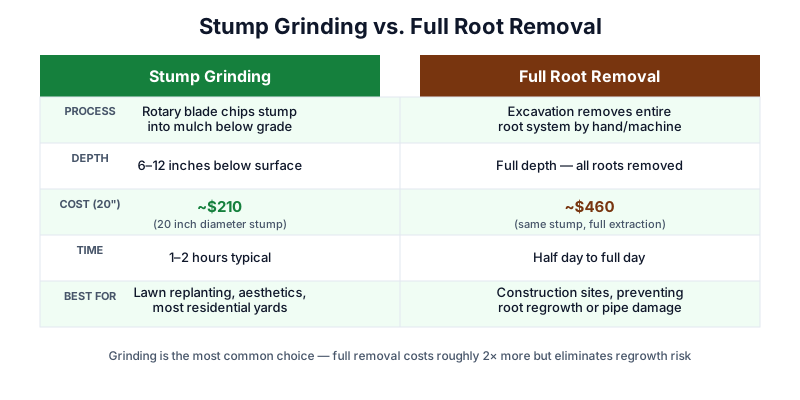
After the tree comes down, you're left with a stump. Most arborists won't remove it unless you ask, and pay extra. You've got two options: grinding or full removal. They're very different processes with different costs, different outcomes, and different reasons to choose one over the other.
Here's a straight comparison so you can make the right call for your property.
What Stump Grinding Actually Does
Stump grinding uses a rotating cutting wheel, essentially a large disc with carbide teeth, to chip the stump down 6–12 inches below the soil surface. The machine chews through the wood and produces a pile of coarse wood chips. The roots stay in the ground.
A typical 20-inch stump takes about 30–45 minutes with a commercial grinder. A 36-inch stump might take 90 minutes. After grinding, you're left with a depression in the soil filled with wood chip debris. Most homeowners fill it with topsoil and seed it over.
What Grinding Doesn't Do
It doesn't remove the roots. A large tree can have a root system spreading 2–3 times the diameter of the crown, for a 60-foot tree, that's potentially 60–90 feet of root network underground.
Those roots decay on their own over time. For most species, you're looking at 3–7 years for significant breakdown. Faster-decaying species like willows and poplars break down in 2–4 years. Slower species like oaks can take 8–10 years.
While they're decaying, they can become habitat for fungal growth (particularly *Armillaria* root rot), and occasionally cause uneven settling in a lawn. Neither is typically a serious problem for a yard, but it matters if you're building over that area.
What Full Stump Removal Involves
Full stump removal excavates the entire root ball from the ground. It's a substantially bigger operation, you need an excavator or a powerful stump puller, the crew digs out a significant amount of soil, and the root mass has to be hauled away.
For a 36-inch stump on a tree with a 40-foot spread, you might be looking at excavating a hole 6–8 feet across and 3–4 feet deep. That's a lot of displaced soil and a significant repair job afterward.
The result is completely clean soil, no roots, no stump, nothing left behind. You can build, plant, pour concrete, or do whatever you want with the space.
Cost Comparison Using Real Numbers
Here's how the two options price out across different trunk diameters:
Stump grinding formula: $150 base + $3 per inch of diameter
| Trunk Diameter | Grinding Cost |
|---|---|
| 16 inches | $198 |
| 20 inches | $210 |
| 28 inches | $234 |
| 36 inches | $258 |
| 48 inches | $294 |
Full removal formula: $300 base + $8 per inch of diameter
| Trunk Diameter | Full Removal Cost |
|---|---|
| 16 inches | $428 |
| 20 inches | $460 |
| 28 inches | $524 |
| 36 inches | $588 |
| 48 inches | $684 |
For a 20-inch stump, grinding costs $210 versus $460 for full removal, a difference of $250. For a 36-inch stump, it's $258 versus $588, a difference of $330. The bigger the stump, the bigger the gap in absolute dollars, but the percentage gap stays relatively consistent at around 55–60% more for full removal.
Sample Full Calculation
Picture two stumps, a 20-inch birch and a 36-inch oak, and you want to compare grinding vs. full removal for both:
Grinding both: $210 + $258 = $468 total
Fully removing both: $460 + $588 = $1,048 total
That's a $580 difference. That gap shrinks if you're already spending $2,000+ on tree removal (most arborists discount bundled stump work), but it's still real money.
You can model your specific stump scenario using the tree removal cost calculator, it handles stump work as a separate line item.
When Grinding Is the Right Choice
Stump grinding works well in the vast majority of residential situations:
You're keeping it as lawn. Fill the hole with topsoil, seed or sod it over, and within a growing season you won't know there was a tree there. The underground roots cause no surface problems.
The tree wasn't diseased. If the tree died from a root fungal infection, leaving the roots can potentially spread the pathogen to nearby trees. In that case, full removal is the more cautious call, get an arborist's assessment first.
Budget matters. If cost is a factor, grinding is the practical choice for almost every yard situation. The TCIA confirms grinding as standard practice for residential stump management.
You want it done quickly. A grinding crew can do 3–5 stumps in a day. Excavation takes significantly more time and leaves a much larger mess.
When Full Removal Is Worth the Extra Cost
There are situations where paying for full removal makes real sense:
You're building on the spot. A deck, shed foundation, driveway extension, or any poured concrete over the root system? You need those roots out. Decaying roots leave voids as they break down, which can cause settling and cracking in structures built above them.
You're replanting a tree in the same location. Roots from the previous tree compete with and can harbor pathogens that affect a new planting. Start with clean soil.
The stump is in the way of drainage or irrigation work. Root systems can disrupt pipe runs and French drains. If you're doing any underground work nearby, full removal during the same visit saves a second excavation later.
The tree had a serious fungal disease. *Armillaria* (honey fungus) and *Ganoderma* (artist's conk) are root pathogens that can persist in dead root tissue and spread to nearby healthy trees. An ISA-certified arborist can assess whether the specific pathogen warrants full removal.
Can You Rent a Grinder and DIY It?
Yes, for small stumps under 12 inches in diameter and in an accessible location.
Stump grinders are available at most equipment rental yards for $150–$300 per day depending on machine size. The machines are heavy (some weigh over 1,000 lbs), require careful operation around rocks and buried utilities, and produce flying debris. Eye protection, ear protection, and heavy gloves are non-negotiable.
Before renting, call 811 (the national "call before you dig" number) to have underground utilities marked. A grinder that hits a buried gas line or electrical conduit turns a $200 weekend project into an emergency.
For stumps over 16 inches, the rental grinders typically available to the public are underpowered. The job takes much longer and produces inconsistent results. Professional grinders run 25–50 horsepower versus the 12–14 HP on rental units.
DIY grinding is a reasonable option for a healthy adult comfortable with large machinery and a small, accessible stump. For anything larger or more complex, the professional cost is usually worth it. For a broader look at DIY vs. professional decisions, see our guide on DIY vs. professional tree removal.
Bundling Stump Work With Tree Removal
The best time to negotiate stump treatment is when you're booking the tree removal itself. Equipment is already on-site, the crew is already mobilized, and adding stump work adds minimal overhead from the arborist's perspective.
Ask for a bundled price. In most cases, arborists will discount stump grinding by $25–$50 when it's added to a tree removal job. Some include it in the removal quote as a standard package, always ask explicitly whether stump work is included.
If you wait and call back weeks later for a separate stump grinding job, you'll pay a new mobilization fee and full price.
Picking the Right Option
For most homeowners keeping the area as lawn or garden: grind the stump. It's faster, cheaper, and perfectly adequate. The underground roots aren't your problem, they'll be gone within a few years.
If you're planning to build, pave, or replant in that exact spot: full removal is worth the cost. The price difference is real, but so is the alternative, settling, interference with new plantings, or excavating around buried roots during a future project.
Not sure what stump treatment fits your situation? See our full cost breakdown in how much does tree removal cost and check the 7 factors that drive tree removal cost for more on how stump work fits into an overall quote.
Ready to see what your specific stump will cost? Use the stump cost calculator, enter your trunk diameter, select grinding or full removal, and you'll get a real price range in seconds.
For more on how these estimates are built, visit our about page.