Do You Need a Permit to Remove a Tree? A Homeowner's Guide
Tree removal permits can cost $0 or save you from a $10,000 fine. Here's how to find out if you need one before you cut anything down.
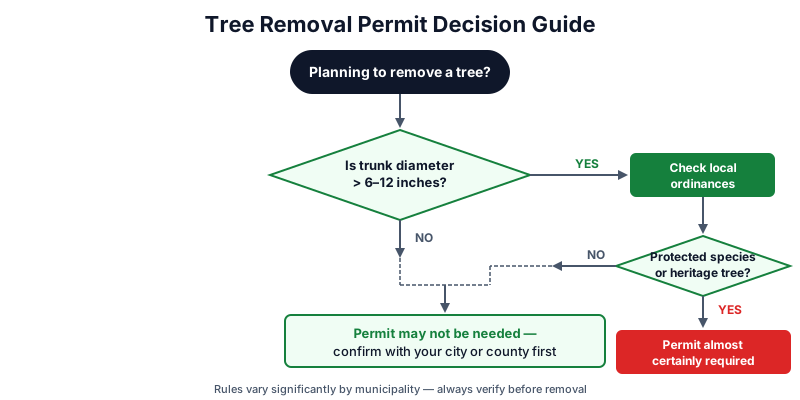
Before a single branch comes down, there's a question a lot of homeowners skip: do I actually need a permit for this?
In some cities, removing a 10-inch oak in your own backyard is a straightforward call to an arborist. In others, that same tree could require a permit, an inspection, and a waiting period, and cutting it without approval could cost you $500 to $10,000 in fines.
This guide walks through when permits are required, which states have the strictest rules, how to apply, and what "emergency removal" means for permit requirements.
When Permits Are Typically Required
There's no federal law governing tree removal on private property. Rules vary by state, county, city, and even neighborhood, which is what makes this complicated.
That said, most municipalities that regulate tree removal use one or more of these thresholds:
Diameter at breast height (DBH) minimums. DBH is measured at 4.5 feet above ground. The most common trigger points are 6 inches DBH, 8 inches DBH, or 12 inches DBH. Trees at or above that size typically require a permit before removal.
Protected or heritage tree designations. Many cities maintain lists of protected species (often native oaks, elms, or redwoods) regardless of size. Some large trees are individually designated as heritage trees and can't be removed without a formal hearing.
Location on the property. Some ordinances only regulate trees in front yards or within a certain distance of the street (often called the "right-of-way"). Backyard trees may be unregulated while front-yard trees of the same species and size require permits.
HOA rules. If you're in a homeowners association, you may need HOA approval on top of, or instead of, a city permit. Check your CC&Rs before calling an arborist.
The most reliable way to check: call your city or county planning or public works department. Most have a direct line or an online lookup tool for tree ordinances. Your arborist should also know local requirements, this is part of what you're paying for when you hire an ISA-certified professional.
States With Strict Tree Removal Regulations
Permit requirements are most stringent in states where urban tree canopy is a policy priority. Here's a quick overview of states homeowners frequently run into issues with:
California
California doesn't have a statewide residential tree removal law, but many cities fill that gap aggressively. Palo Alto, Los Angeles, San Jose, and Berkeley all require permits for trees over 6 inches DBH on private property. Protected species lists in the Bay Area often include coast live oak, valley oak, and blue oak, meaning even a 6-inch oak in your backyard may be off-limits without city approval.
Cities in fire-risk zones may also have conflicting rules: the fire department may encourage removing dead or dry vegetation, while the planning department requires a permit to do so. Both departments may need to be consulted.
Florida
Florida has its own Urban Forestry program, and many of its cities, Tampa, Orlando, Jacksonville, Sarasota, enforce strong tree protections. Sarasota, for example, requires a permit for any tree with a 10-inch or greater DBH and has a replacement requirement: if you remove a protected tree, you must plant new trees of a specified caliper to replace the removed canopy.
Miami-Dade County applies strict protections to native species including live oak, gumbo limbo, mahogany, and royal palm.
Oregon
Oregon cities like Portland, Eugene, and Bend have strict urban tree protections. Portland's Heritage Tree program designates specific trees that cannot be removed without city council approval, a process that can take months. Standard removal of trees over 6 inches DBH on private property in Portland requires a Type II tree removal permit.
Texas
Texas is generally more permissive than other large states, but individual cities have enacted significant protections. Austin's Heritage Tree Ordinance protects trees of 24 inches DBH or greater, removing them requires a permit and, in some cases, mitigation payments. San Antonio and Houston have their own ordinances covering protected species.
Fines for Unauthorized Tree Removal
The financial consequences of skipping a permit vary widely, but they're consistently higher than the permit application fee.
Common fine ranges:
- Small cities and counties: $500–$2,000 per tree
- Mid-size cities: $2,000–$5,000 per tree
- Cities with strong heritage tree protections: $5,000–$10,000+ per tree, sometimes calculated by the appraised value of the removed tree using ISA valuation methods
Beyond fines, some jurisdictions require remediation, meaning you're responsible for planting replacement trees of a specified size and species, and maintaining them for 2–3 years. In extreme cases involving protected heritage trees, removal without a permit has resulted in civil suits.
The fine always exceeds the permit fee. Permit applications typically cost $50–$300 and take 1–4 weeks to process.
How to Apply for a Tree Removal Permit
The process varies, but the general steps are consistent across most municipalities:
Step 1: Identify the right department. This is usually the city's Planning Department, Parks and Recreation Department, or Urban Forestry division. Some cities route applications through the Building Department.
Step 2: Gather basic information about the tree. You'll typically need the tree's approximate height, trunk diameter (DBH), species if known, and its location on a simple site plan showing the property lines and nearby structures.
Step 3: Provide a reason for removal. Common accepted reasons include: tree is dead, tree is diseased beyond treatment, tree poses a structural hazard, tree is causing foundation damage, construction requires removal.
Step 4: Pay the application fee. Usually $50–$300. Some cities waive fees for hazard trees documented by a certified arborist.
Step 5: Wait for approval. Processing takes 1–4 weeks in most cities. Some cities schedule a site inspection before issuing the permit; others approve based on your documentation.
Step 6: Schedule removal within the permit window. Most permits expire 30–90 days after issuance. If you don't complete the removal in time, you'll need to reapply.
Can Your Arborist Handle the Permit?
Many ISA-certified arborists and TCIA-member companies will pull the permit on your behalf as part of the job. This is particularly common for larger companies that do regular work in a municipality, they often have existing relationships with the permitting office and know exactly what documentation is needed.
Ask when you're getting quotes: "Do you handle the permit?" If they say yes, confirm whether the permit fee is included in their quote or added separately.
If you want to know more about what else goes into an arborist's quote, the diy vs professional tree removal guide covers the full scope of what licensed professionals handle.
How Long Does the Permit Process Take?
Most residential permits process in 1–4 weeks under normal conditions. However:
- Heritage tree permits can take 4–12 weeks, particularly if a public hearing is required
- Protected species may require a review by a city-appointed arborist, adding 2–3 weeks
- Construction-related tree removal (new builds, additions) is often bundled with the building permit, which may have its own timeline
If you're on a construction schedule, plan for permit processing time before you can begin site prep. Contractors who assume they can remove trees on day one of a project and discover a permit requirement on site can face significant delays.
Emergency Tree Removal and Permits
What if a tree falls on your house, a storm damages it severely, or it's leaning dangerously after a weather event? Emergency removals are handled differently.
Most municipalities have an emergency provision that allows immediate removal of a tree that poses imminent danger to life or property, without waiting for a permit. The typical requirement is:
- Document the emergency condition with photos before any work starts
- Notify the city within 24–72 hours of the removal (the exact window varies by municipality)
- File a post-emergency permit with the documentation
Your arborist should handle the notification and paperwork. If they say emergency removals never need any paperwork, that's worth questioning, most cities do require some form of post-removal notification even for true emergencies.
If a tree is damaged in a storm but isn't immediately falling, it's not legally an emergency. Get the permit. The when to remove a tree guide can help you evaluate whether a damaged tree is urgent or can wait through a normal permit process.
A Note on HOA Restrictions
Even if your city doesn't require a permit for your specific tree, your HOA may have its own approval process, often requiring a written request, committee review, and sometimes a waiting period of 2–4 weeks.
Check your CC&Rs (Covenants, Conditions & Restrictions) under sections labeled "landscaping," "tree removal," or "exterior modifications." Some HOAs also have approved vendor lists and won't allow removal by companies not on that list.
Getting HOA approval and city permits aren't mutually exclusive, you may need both.
Calculate Your Costs First
Before you go through the permit process, it helps to know what you're actually looking at cost-wise. Permits are worth it for trees that genuinely need to come down, but if you're on the fence about removing a tree, knowing the full price (including permit fees) helps you make a more informed decision.
Use our tree removal cost calculator to get a realistic estimate based on your tree's height, diameter, condition, and proximity to your home. Add the permit fee on top for a full picture of your out-of-pocket cost.
For background on how our estimates are built and where the formula data comes from, visit the about page.
The how much does tree removal cost guide covers the full cost breakdown including all the variables that affect your final quote.
A Quick Permit Checklist
You probably need a permit if:
- Your tree is 6 inches DBH or larger and you're in a city with tree ordinances
- The tree is a protected or heritage species
- You're in California, Florida, Oregon, or a major Texas city
- Your HOA has landscaping restrictions
You probably don't need a permit if:
- Your municipality has no tree ordinance (common in rural areas and some smaller towns)
- The tree is below the local size threshold
- The tree is in a backyard and your ordinance only covers front-yard trees
- It's a genuine emergency with imminent hazard to life or property
When in doubt, make one phone call to your city planning department. It's free, takes 10 minutes, and is far cheaper than the alternative.